Understanding Adrenal Fatigue
Signs, Causes, and Solutions

In today’s world, stress often never fully arrives nor fully leaves. We experience extended, low level stress from workplace pressure and constant digital distractions. Add to this an extended emotional strain from an illness, divorce, bereavement or custody battle and it is no wonder that 20-30% of the population report symptoms of extended periods of stress that last beyond 6 months.
Chronic stress acts as a powerful amplifier of cardiovascular disease, metabolic dysfunction, autoimmune and inflammatory conditions, hormonal imbalance, mental health disorders, immune suppression, and cognitive decline.
Our bodies are ill-prepared for this.
A difficult custody battle is probably equivalent to a near-fatal bout of cancer.
Dr Jordan B Peterson
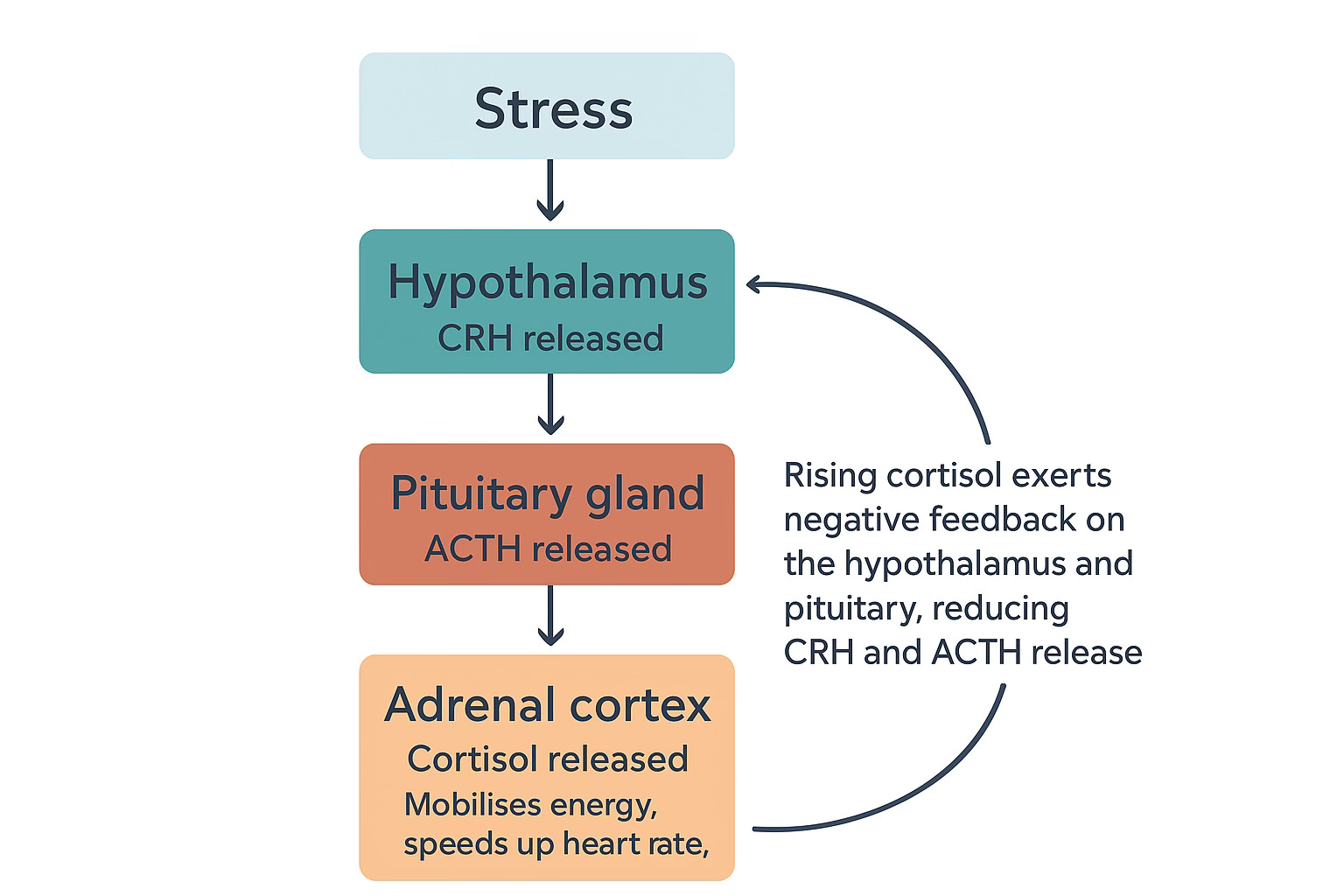
The HPA (hypothalamus-pituitary-adrenal) axis is a feedback loop that regulates many of the hormones in our body. Its primary role is to speed up or slow down our metabolism and cardiovascular system in response to threats, helping us survive danger.

When you experience stress, the body responds immediately. The hypothalamus releases corticotropin-releasing hormone (CRH), which signals the pituitary gland to release adrenocorticotropic hormone (ACTH), prompting cortisol production from the adrenal glands. Cortisol mobilises energy, speeds up the heart rate, and dilates blood vessels to prepare for action. Once cortisol levels rise sufficiently, the hypothalamus senses the feedback and stops producing CRH. The system returns to baseline, the stress response fades.
The HPA axis is perfectly balanced to handle short bursts of danger, not extended low grade stress and uncertainty.
This constant activation means hypothalamic cortisol receptors are flooded for extended periods, and over time, they desensitise. The result is cortisol levels remain high, the stress response is prolonged, and the HPA axis struggles to reset.
Eventually, the hypothalamus can become exhausted and unable to regulate CRH effectively. This is what is commonly referred to as adrenal fatigue.
Prolonged high cortisol levels also suppress thyroid hormone activity, further compounding the fatigue many people experience

The stages of adrenal fatigue begin with the alarm stage, which includes increased heart rate, elevated blood sugar, heightened reliance on caffeine, and a feeling of being “wired but tired”.
The resistance stage is where the body attempts to regulate the adrenal response, sometimes for years. Symptoms include increased caffeine dependency, self-soothing behaviours like humming or talking to oneself (no, you’re not going mad), lower resistance to illness, inflammation, irritability, and reduced focus and motivation.
In the adrenal fatigue stage, cortisol receptors become unresponsive, the system is flooded with cortisol, and the brain experiences fog, emotional flatness (anhedonia), low motivation, and difficulty getting out of bed. Tyrosine reserves are consumed for chronic cortisol production, reducing neurotransmitter availability. To prevent progression, we need a circuit breaker.